

Your outdoor trees look beautiful wrapped in twinkling holiday lights. But every January, I see the damage that improper holiday decorating causes to trees throughout Port Orange and Volusia County.
Here’s the thing: most people don’t realize they’re harming their trees when they hang Christmas lights. Those little mistakes add up, and by the time you take the lights down in January, the damage is already done.
I’ve been doing tree work in the Port Orange area since 1995, and I’ve seen everything from girdled branches to stripped bark to trees that died from holiday decoration damage. The good news? All of this is completely preventable.
Let me show you how to create that magical holiday lighting display without sacrificing your tree’s health. Your live oak or magnolia can look spectacular for the holidays and still thrive for decades to come.
The Hidden Dangers of Holiday Tree Decorating
Most homeowners have good intentions when they decorate their trees. But several common practices cause real harm.
Nails, Staples, and Screws Wound Trees
This is the biggest mistake I see. Homeowners hammer nails into tree trunks to anchor lights or extension cords. Others use staple guns on branches.
Every hole you create in a tree’s bark is an entry point for disease, insects, and decay. Trees don’t heal like human skin. They compartmentalize damage, but those wounds remain vulnerable points for the tree’s entire life.
A single staple might seem harmless, but multiply that by 50 staples around your tree, and you’ve created 50 potential infection sites. In our humid Florida climate, fungal diseases love these entry points.
Wire and String Cut Into Growing Bark
Here’s what happens when you wrap wire, fishing line, or even twist ties tightly around branches: as the tree grows, that material cuts into the bark like a tourniquet.
This process is called girdling. The wire gradually cuts through the bark and into the cambium layer underneath, eventually cutting off the flow of water and nutrients. The branch beyond that point will die.
I’ve removed dead branches from Port Orange trees where you could still see the wire embedded deep in the bark, sometimes years after the lights were taken down.
Heavy Ornaments Stress Branches
Those big lighted ornaments and heavy icicle lights might look festive, but they’re dead weight pulling on branches designed to hold leaves, not pounds of decorations.
Over time, this constant downward pressure can weaken branch attachments. In extreme cases, branches can crack or break, especially during windy winter weather we get along the coast.
For professional tree care advice or help with high branches, call 386-259-8182.
Safe Methods for Hanging Holiday Lights on Trees
You can absolutely create a beautiful holiday display without harming your trees. You just need to use the right techniques and materials.
Use Light Clips Designed for Trees
Invest in proper light clips specifically designed for outdoor tree decorating. These clips attach to branches without puncturing bark.
Look for clips that:
- Hook or clamp onto branches without nails
- Are made of weather-resistant plastic
- Can be easily removed without tools
- Don’t require tight wrapping or tying
These clips cost a few dollars but will save your trees and make decorating easier every year.
Loose is Better Than Tight
When attaching anything to a tree, loose is always better than tight. Whether you’re using light clips, velcro straps, or other fasteners, leave some slack.
Your tree will grow and sway in the wind. Decorations need room to move with the tree rather than constricting it. Think of it like wearing a comfortable shirt versus one that’s too tight. Your tree needs to breathe.
Choose Lightweight LED Lights
Modern LED Christmas lights are a perfect choice for tree decorating. They’re lightweight, energy-efficient, and generate very little heat.
Older incandescent lights are heavier and produce more heat, which can actually damage leaves and bark when placed too close. LED lights eliminate both concerns.
The lighter the decoration, the less stress on your tree’s branches.
Proper Extension Cord Management
Extension cords should never be nailed or stapled to tree trunks. Instead, secure them loosely to the ground with landscape staples, or run them through PVC pipe for protection.
If you must route a cord up a tree trunk, use wide velcro straps or soft rope tied very loosely. Check these periodically to make sure they’re not getting tight as the tree grows.
Species-Specific Considerations for Port Orange Trees
Different trees tolerate holiday decorating differently. Here’s what you need to know about common Port Orange landscape trees.
Live Oaks: Strong but Sensitive
Live oaks are Port Orange staples, and they make stunning holiday displays with their sprawling branches. These trees are strong, but their bark is relatively thin.
For live oaks:
- Focus lights on the outer third of branches
- Avoid the trunk entirely if possible
- Use the tree’s natural branch structure to drape lights
- Be extra careful about girdling on smaller branches
Live oaks grow year-round in Florida, so even winter decorating can cause girdling damage if you’re not careful.
Palm Trees: Special Challenges
Cabbage palms and other palm species are popular in Port Orange, and many people like to wrap the trunks with lights.
Here’s what you need to know: palms grow from the top, and the trunk doesn’t expand in diameter like oak trees. However, the trunk’s outer layer is still vulnerable to damage.
For palms:
- Wrap lights very loosely around the trunk
- Never use nails or staples on palm trunks
- Focus on the fronds (leaves) with lightweight displays
- Be careful not to damage the growing crown at the top
Southern Magnolias: Broad-Leaf Beauties
Magnolias have beautiful evergreen foliage that looks magical with lights. But those big leaves can be damaged by rough handling.
For magnolias:
- Gently weave lights through the canopy
- Avoid placing lights directly on leaves (heat damage)
- Support heavy light strands independently rather than letting branches carry all the weight
- These trees are moderate growers, so check for girdling mid-season
At Arborist Action Tree Service, we understand Port Orange’s unique coastal trees and can help you plan safe holiday decorating. Call 386-259-8182 for expert advice.
Installation Tips That Protect Tree Health
Beyond the materials you use, how you install lights matters just as much.
Work During Daylight
Install your lights during daylight hours when you can clearly see what you’re doing. You’ll make better decisions about placement and avoid accidentally damaging branches you can’t see well.
Trying to hang lights in the dark leads to rough handling, broken branches, and improper attachment methods.
Use a Stable Ladder Properly
Many holiday decorating injuries happen from ladder falls, and trees can be damaged when ladders slip or are leaned incorrectly against trunks.
Always:
- Have someone spot you
- Position the ladder on stable, level ground
- Lean the ladder against strong branches, not small twigs
- Consider having professionals handle lights above 15 feet
Test Lights Before Installation
Nothing’s more frustrating than hanging 300 lights only to discover half the strand is burnt out. Test everything before you climb the ladder.
This also prevents the temptation to yank and pull on lights when troubleshooting while they’re already in the tree.
Plan Your Layout First
Walk around your tree and plan where lights will go before you start hanging. This prevents excessive handling, repositioning, and potential damage from changing your mind halfway through.
Take photos of your setup so you can replicate it next year more efficiently.
Safe Removal is Just as Important
January rolls around, and it’s time to pack away the decorations. How you remove lights is just as important as how you installed them.
Don’t Rush the Process
I know you’re ready to move on from the holidays, but rushed removal causes damage. Yanking lights free can strip bark and snap small branches.
Take the same care removing lights as you did installing them. Use your ladder, unclip each strand properly, and gently gather cords.
Inspect as You Remove
As you take lights down, inspect the branches and trunk. Look for:
- Any wire or string that got too tight
- Damage from installation you didn’t notice
- Broken or dead branches that need attention
- Signs of disease or insect activity
This is a perfect time to assess your tree’s health while you’re up close examining every branch.
Store Materials for Next Year
Properly stored light clips and equipment last for many years. Label them by location (“front oak tree,” “magnolia by driveway”) so next year’s installation is even easier.
Good storage prevents you from jerry-rigging solutions next December when you can’t find your proper clips.
When to Call Professional Tree Decorators
Some situations call for professional help, and there’s no shame in admitting a job is beyond your comfort level.
High or Hard-to-Reach Areas
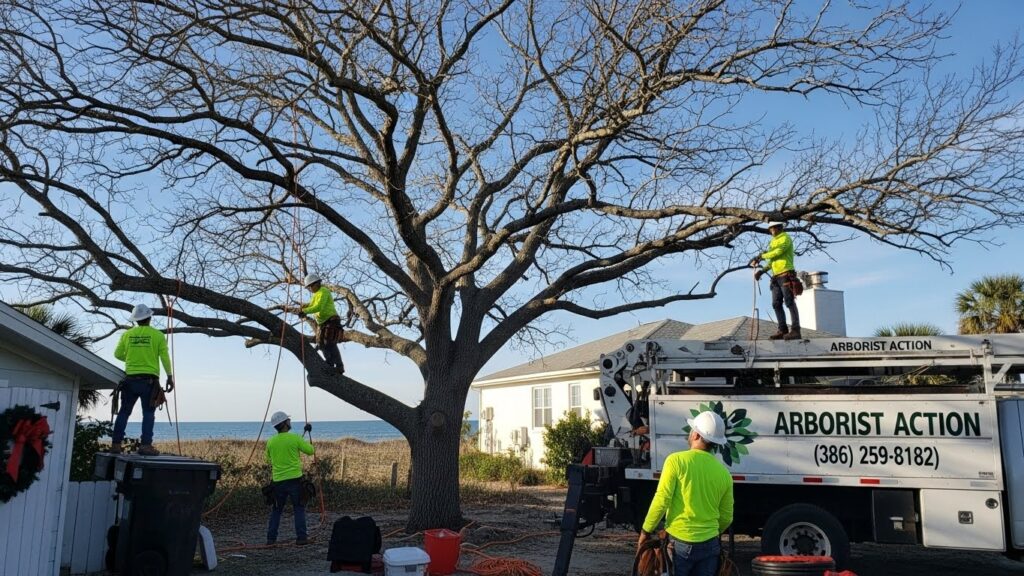
If your lights need to go above 20 feet, or if major branches require scaling the tree to reach, that’s professional territory. We have the climbing equipment and experience to work safely at heights.
Those towering live oaks along Port Orange City Center? Leave those to the pros.
Large, Complex Trees
Trees with dense canopies or complicated branch structures can be challenging to light effectively and safely. Professionals can create stunning displays while ensuring every attachment point is secure and safe.
Physical Limitations
If you have mobility issues, balance problems, or any concern about working on a ladder, don’t risk it. Professional installation is worth the investment versus a trip to the emergency room.
Commercial Properties
Business owners in Port Orange often want elaborate holiday displays. Commercial properties need professional installation for both safety and liability reasons.
Whether you’re in Port Orange, Ormond Beach, Daytona Beach, or anywhere in Volusia County, we can help with your holiday tree lighting needs. Call 386-259-8182 today.
Alternative Decorating Ideas That Reduce Tree Stress
If you want to minimize any potential impact on your trees, consider these alternatives.
Ground-Based Lighting
Spotlight your trees from below with landscape lighting instead of wrapping them in lights. This creates a dramatic effect with zero tree contact.
Solar-powered or low-voltage LED spotlights can illuminate your tree’s natural beauty without any installation on the tree itself.
Focus on Lower Branches Only
You don’t have to light the entire tree. Sometimes the most elegant displays focus on the lower 8-10 feet of the tree that are at eye level anyway.
This keeps installation easy, safe, and minimizes the number of attachment points on your tree.
Decorative Elements Around the Tree
Create your holiday magic around the tree rather than in it. Place lighted ornaments, decorations, or even a small tree near your large landscape tree.
Your live oak becomes the backdrop for the display rather than the display itself.
Signs Your Tree Was Damaged by Holiday Decorations
Watch for these warning signs after you remove holiday lights:
Immediate signs:
- Broken or cracked branches
- Stripped or gouged bark
- Embedded wire or string visible in bark
- Sap oozing from puncture wounds
Delayed signs (appearing in spring/summer):
- Branches that don’t leaf out
- Dead sections beyond where lights were attached
- Discolored or dying foliage
- Fungal growth on wounds
If you notice any of these issues, call a professional arborist for assessment. Early intervention can sometimes save damaged branches.
Frequently Asked Questions
Can I use nails or staples on my tree trunk for holiday lights?
No, never use nails, staples, or screws on tree trunks or branches. Every puncture wound creates an entry point for disease, insects, and decay. Trees cannot heal these wounds like human skin. Instead, use light clips, hooks, or velcro straps designed for tree decorating. These methods hold lights securely without damaging the bark.
How tight can I wrap lights around tree branches?
Lights and any attachment materials should always be loose, not tight. Leave enough slack that you can fit two fingers between the material and the bark. Tight wrapping causes girdling, where the material cuts into the growing bark and eventually kills the branch. This is especially important in Florida where many trees grow year-round.
Are LED lights better for trees than traditional incandescent lights?
Yes, LED lights are much better for trees. They’re lightweight (putting less stress on branches), produce very little heat (won’t damage leaves or bark), and use less electricity. Older incandescent lights are heavier and generate significant heat that can burn foliage when placed too close. For tree health and safety, LED lights are the clear choice.
Do I need professional help to light large trees?
If your tree requires working more than 15-20 feet off the ground, has a complex canopy structure, or if you’re uncomfortable with heights, professional installation is recommended. Tree care professionals have proper climbing equipment, safety training, and insurance. For large live oaks and tall trees common in Port Orange, professional installation ensures both your safety and your tree’s health. Call 386-259-8182 for an estimate.
Enjoy the Holidays Without Harming Your Trees
Holiday tree lighting can be both beautiful and safe for your trees. The key is using proper materials, gentle installation techniques, and remembering that your landscape trees are living organisms that will be with you for many holidays to come.
Those few extra minutes to install lights correctly means your Port Orange trees will thrive for decades, providing beauty and shade long after this holiday season ends.
If you need advice about decorating specific trees, notice damage after removing lights, or want professional installation for large trees, we’re here to help.
Call Arborist Action Tree Service at 386-259-8182. We’ve been caring for Port Orange trees since 1995 and can help you celebrate the holidays while protecting your valuable landscape.